

Broken Plate Report 2026
This year’s Broken Plate report published by the Food Foundation reveals healthy food has become increasingly unavailable and unaffordable, with Action on Salt & Sugar insights revealing high sugar breakfast cereals and infant snacks remain a prevalent problem.
Read the Broken Plate Report 2026.
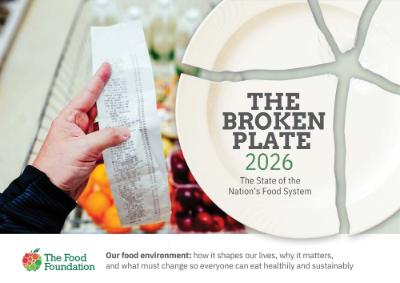
The annual Broken Plate report uses a series of key markers to document the health status of the UK’s food system. This year’s insights revealed healthy food to be increasingly difficult to afford and access for many across the country, with the poorest families now needing to spend an estimated 85% of their disposable income to afford a healthy diet.
As part of the report, Action on Salt & Sugar contributed to two of the sixteen metrics, assessing sugar and fibre in children’s breakfast cereals and the use of marketing and nutrition claims on infant snack products.
Children’s breakfast cereals
As a common breakfast staple for children across the country, breakfast cereals are uniquely placed to help shape energy, improve concentration for the day, and hold the potential to support good nutrition habits early.
However, as our insights show, they are too often high in sugar, and are frequently promoted to children using cartoon characters, eye-catching imagery, and colourful packaging. We found:
- 1 in 5 (20%) children’s breakfast cereals were high in total sugars.
- More than 3 in 4 cereals (76%) contained medium levels of total sugars.
- Only 1 in 10 children’s cereals were high in fibre.
With only 4% of 11–18-year-olds meeting their recommended fibre intake and a mere 9% of children meeting free-sugar recommendations, these high-sugar and low-fibre breakfast options are failing to provide children with a healthy start to the day. Our findings highlight that reformulation efforts from food businesses need to go further to improve these products and children’s health.
Infant food marketing
In August 2025, the UK government issued voluntary guidelines surrounding sugar content in infant foods. Within the guidance, it is recommended that baby snacks should contain no added sugar or feature dishonest, misleading or exaggerated labelling.
In our analysis of 142 baby and toddler snack products, we found:
- 99% of products featured a front-of-pack claim - averaging 5 claims per snack.
- The most common claim was ‘compositional or nutritional’, featuring claims such as “no added sugar”, or advertising the naturalness or healthiness of ingredients.
Despite this high volume of positive marketing claims, 74% of baby and toddler snack products contained high or medium levels of total sugars.
The research also found that some products featuring “no added sugar” or similar front of pack claims were still high in total sugars. This is largely due to the frequent use of fruit purees, which are a source of free sugars. High intakes of free sugars are associated with increased risk of dental caries and excess energy intake, contributing to poor health outcomes in early life.
This contradiction between the health messaging and reality of infant snacks risks undermining parents' ability to make informed decisions about their infants’ diet and highlights the importance of making the baby food guidelines mandatory, as opposed to the current – and evidently failing – voluntary system in place.
Commenting on The Food Foundation’s Broken Plate report, Sonia Pombo, Head of Research and Impact at Action on Salt & Sugar, says:
“This new report lays bare the reality facing millions of families in that healthy food is increasingly unaffordable, while products high in fat, salt and sugar remain cheap, heavily promoted and far too widely available. When households with children on the lowest incomes need to spend 85% of their disposable income to afford a healthy diet, we cannot pretend this is simply about personal choice.
Our own research for the Broken Plate report shows how deeply this problem is embedded from the earliest years of life. Just one in ten breakfast cereals marketed to children are high in fibre, while one in five are still high in total sugars. Under the updated 2018 Nutrient Profiling Model, nearly all would still be classified as less healthy, largely because of excessive use of free sugars in these products.
The situation with infant snacks is equally concerning. Almost every baby and toddler snack on the market carries a front-of-pack nutrition, health or marketing claim, with an average of five claims per product, yet nearly three quarters of those had medium or high levels of total sugars. This type of marketing creates a health halo around products that are often far from ideal for babies and toddlers. High free sugar intakes also increase the risk of tooth decay, which remains the number one reason young children are admitted to hospital.
Parents should not be expected to decode misleading claims while trying to feed their children on stretched budgets. The Government must make healthy sales reporting mandatory, strengthen incentives for companies to sell healthier products, and make the voluntary guidelines for commercial infant snacks mandatory and aligned with stricter WHO recommendations. Without firm action, the food industry will continue to profit from products that undermine children’s health and deepen inequalities.”
For comments or media enquiries regarding our contribution to the report, please contact David Clarke at david@rock-pr.com
